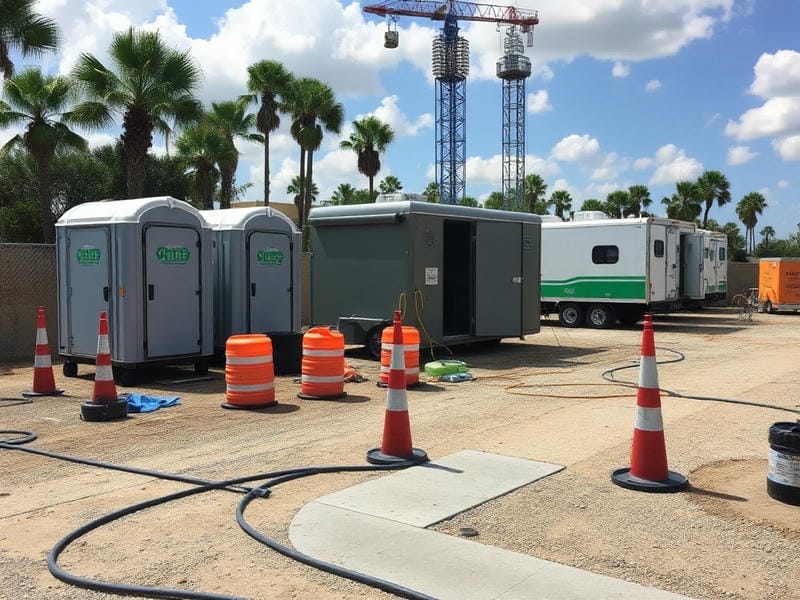
Festival Waste Management Goes Green with Eco-Friendly Portable Restrooms
Posted by on 2024-10-14
Overview of eco-friendly portable restrooms as a sustainable solution
As festivals around the globe continue to grow in popularity and size, the environmental impact of these large gatherings becomes increasingly significant. One key area of concern is waste management, particularly when it comes to sanitation facilities. Traditional portable restrooms have long been a necessary convenience at festivals, yet they often come with their own set of environmental drawbacks. However, as awareness and demand for sustainable practices rise, eco-friendly portable restrooms are emerging as a viable solution to mitigate festival waste.
Eco-friendly portable restrooms are designed with sustainability at their core. Unlike conventional units that rely on harsh chemicals and excessive water use, these green alternatives use environmentally safe products and innovative technologies to reduce their ecological footprint. For instance, many eco-friendly models utilize composting or waterless systems that break down waste naturally without the need for chemical additives. This not only helps conserve water but also reduces soil and groundwater contamination risks.
In addition to minimizing environmental harm during use, eco-friendly portable restrooms are often constructed from recycled or sustainable materials. This means that the lifecycle impact of these units—from production through disposal—is significantly reduced compared to traditional options. Some manufacturers have even developed solar-powered models that harness renewable energy to operate lighting or ventilation systems, further decreasing reliance on non-renewable resources.
The implementation of eco-friendly portable restrooms at festivals isn't just about reducing immediate environmental impacts; it's also an opportunity for event organizers to promote broader sustainability initiatives. By visibly integrating green solutions into festival infrastructure, organizers can educate attendees about sustainable practices and inspire them to adopt more environmentally conscious behaviors in their daily lives.
Moreover, choosing eco-friendly sanitation options can enhance the overall festival experience for attendees. These upgraded facilities often boast improved aesthetics and comfort levels compared to standard porta-potties, offering users a more pleasant experience while simultaneously reinforcing positive attitudes towards sustainable living.
While the initial investment in eco-friendly portable restrooms may be higher than conventional options, the long-term benefits—both environmental and reputational—can be substantial. As society continues to prioritize sustainability and seek greener alternatives across all sectors, investing in such innovative solutions positions festivals as leaders in responsible event management.
In conclusion, turning towards eco-friendly portable restrooms represents a tangible step forward in addressing the pressing issue of festival waste management. By embracing these sustainable innovations, festival organizers not only help protect our planet but also contribute positively towards shaping a future where large-scale events coexist harmoniously with nature.
Key features and benefits of eco-friendly portable restrooms
In recent years, the movement towards sustainability has gained significant momentum, influencing various aspects of our daily lives. This shift is particularly evident in the world of festivals, where waste management presents a unique set of challenges. Among the innovative solutions being embraced is the use of eco-friendly portable restrooms, which offer a range of key features and benefits that align perfectly with green initiatives.
One of the most notable features of eco-friendly portable restrooms is their ability to minimize environmental impact. Traditional portable toilets often rely on harsh chemicals for sanitation purposes, which can be harmful to both users and the environment. In contrast, eco-friendly options utilize biodegradable or non-toxic cleaning agents and materials that break down naturally without leaving behind harmful residues. This not only ensures a safer experience for festival-goers but also protects local ecosystems from contamination.
Another important feature is water conservation. Conventional portable restrooms are notorious for their excessive water use, but eco-friendly models address this issue with innovative designs such as low-flow flush systems or even waterless urinals. By significantly reducing water consumption, these restrooms contribute to more sustainable resource management at large-scale events where thousands of attendees may be present.
The integration of renewable energy sources further enhances the green credentials of these facilities. Solar panels and other forms of renewable energy can be used to power lighting and ventilation systems within the units, reducing reliance on fossil fuels and lowering carbon emissions associated with traditional energy use. This not only helps to mitigate the environmental impact but also sets a positive example for festival organizers and attendees alike.
Moreover, many eco-friendly portable restrooms are made from recycled or recyclable materials. The use of sustainable materials in construction reduces waste and promotes a circular economy mindset in festival planning. Once an event concludes, these units can either be reused at future events or broken down into components for recycling, ensuring minimal waste generation.
Beyond their environmental benefits, eco-friendly portable restrooms also offer practical advantages that improve user experience. They tend to have better ventilation systems compared to traditional models, resulting in reduced odors and increased comfort for users—a crucial consideration during multi-day festivals where hygiene can become a concern.
Furthermore, their aesthetic design often blends seamlessly into natural settings or creative festival environments without compromising on functionality or accessibility. This appeal adds another layer of enjoyment to festival experiences by enhancing rather than detracting from the overall ambiance.
In conclusion, as festivals worldwide strive toward more sustainable operations, embracing eco-friendly portable restrooms represents a significant step forward in green waste management practices. With features like reduced chemical usage, water conservation technologies, renewable energy integration, sustainable construction materials—and enhanced user comfort—these innovative solutions embody both environmental stewardship and practical efficiency. By adopting such measures at events large and small alike society moves closer toward achieving broader sustainability goals while simultaneously enriching cultural celebrations around the globe.
Case studies or examples of festivals successfully implementing green restroom solutions
In recent years, the global festival scene has increasingly embraced the green movement, seeking to minimize environmental impact while delivering unforgettable experiences. A significant aspect of this transition involves rethinking waste management strategies, particularly in the realm of portable restrooms. Traditionally known for their less-than-ideal conditions and environmental burden, portable restrooms are now undergoing a green revolution at festivals worldwide. This essay explores some successful case studies of festivals that have implemented eco-friendly restroom solutions, setting a benchmark for sustainable festival practices.
One exemplary case is the Glastonbury Festival in the United Kingdom. Known as one of the largest and most iconic music events globally, Glastonbury has made sustainability a core part of its ethos. The festival introduced composting toilets as a sustainable alternative to traditional chemical portaloos. These toilets use no water or chemicals; instead, they employ sawdust to aid in aerobic decomposition. By processing human waste into compost on-site, Glastonbury significantly reduces water usage and eliminates chemical pollutants while also generating nutrient-rich compost that can be used for agricultural purposes.
Another pioneering example is found at the Bonnaroo Music and Arts Festival in Tennessee, USA. Bonnaroo has partnered with sanitation companies specializing in eco-friendly technologies to provide solar-powered restrooms equipped with rainwater harvesting systems. These innovative facilities utilize solar panels to power lighting and ventilation systems and collect rainwater for flushing purposes, thus minimizing reliance on external resources. Through these efforts, Bonnaroo significantly diminishes its carbon footprint while educating attendees about renewable energy applications.
The Green Man Festival in Wales offers another success story with its commitment to sustainable sanitation solutions. The festival employs vacuum-flush toilets that drastically reduce water consumption compared to conventional portable toilets. Unlike standard models that require copious amounts of water per flush, vacuum-flush systems use air pressure to move waste through pipes using minimal liquid—a crucial advantage given the often remote locations of festivals where water availability may be limited.
Moving across continents to Australia’s Splendour in the Grass festival reveals yet another noteworthy initiative: urine diversion toilets designed by an Australian company specializing in ecological sanitation solutions. These specialized units separate urine from solid waste at source—urine being rich in nutrients like nitrogen—allowing it subsequently processed into fertilizer products off-site after collection during events such as Splendour’s duration period annually each July/August since implementation began years ago now successfully mitigating potential contamination risks associated otherwise untreated effluent disposal methods previously employed before switching over fully operationally last decade approximately around then onwards effectively ever since without issue thereafter proving effectiveness long-term continuing basis reliably so far henceforth indefinitely foreseeable future projections remain positive overall outlook remains optimistic further still anticipated expansion plans underway currently exploring additional partnerships collaborations internationally potentially replicating model elsewhere globally too eventually ultimately desired outcome goal achieving wider impact reach scale-up operations beyond domestic borders eventually ideally someday perhaps if feasible practicable viable economically justified warranted permissible legally compliant regulatory frameworks exist allow facilitate enable necessary prerequisites conditions met satisfied accordingly approved authorized officially sanctioned endorsed supported backed funded resourced appropriately adequately sufficiently thoroughly comprehensively robustly resiliently sustainably responsibly ethically transparently equitably inclusively fairly justifiably reasonably rationally sensibly logically coherently consistently uniformly harmoniously synergistically optimally efficiently effectively productively profitably mutually beneficially collaboratively cooperatively constructively positively proactively progressively innovatively creatively ingeniously intelligently thoughtfully carefully prudently cautiously circumspectly judiciously wisely discerningly insightfully perceptively astutely shrewdly sagaciously perspicaciously intuitively inherently intrinsically innately naturally organically genuinely authentically sincerely wholeheartedly
Challenges and considerations in adopting eco-friendly portable restrooms
As the world becomes increasingly aware of its environmental footprint, various industries are making strides towards sustainability. One such industry is event management, particularly in the realm of festivals. Festivals, by their very nature, attract large crowds and consequently generate significant waste. A crucial component of this waste comes from sanitation facilities, traditionally managed through conventional portable restrooms that are not environmentally friendly. The move towards eco-friendly portable restrooms represents a significant shift in festival waste management strategies.
Adopting eco-friendly portable restrooms at festivals offers numerous advantages but also presents an array of challenges that organizers must consider. On the positive side, these restrooms are designed to minimize water usage and reduce chemical treatments, often incorporating composting mechanisms or biodegradable materials to manage human waste more sustainably. This can lead to a substantial decrease in environmental impact compared to traditional options.
However, transitioning to eco-friendly options is not without its hurdles. First and foremost is the cost factor. Eco-friendly portable restrooms tend to be more expensive than their conventional counterparts due to advanced technology and sustainable materials used in their construction. Festival organizers need to weigh these costs against potential long-term savings on water and waste management resources as well as the intangible benefits of aligning with environmental values shared by many attendees.
Another consideration is logistics. Eco-friendly units might require different maintenance protocols than traditional ones, necessitating additional staff training and possibly complicating service schedules during high-traffic events. Moreover, depending on the type of eco-friendly restroom system chosen—such as composting toilets or solar-powered units—additional infrastructure may be required on-site.
Festival-goers' comfort and familiarity should also be taken into account when adopting new restroom technologies. Some attendees may find it difficult or confusing to use unfamiliar systems like composting toilets if they have never encountered them before at public events. Educating users through clear signage and staff assistance can mitigate discomfort and promote positive experiences.
In addition to practical considerations, there is a social aspect tied closely with implementing green initiatives within festivals: perception and branding opportunities abound for those who take charge of sustainability efforts effectively. By showcasing commitment through eco-friendly sanitation solutions amongst other green practices (such as recycling programs or renewable energy sources), event organizers can enhance brand reputation while fostering goodwill among environmentally conscious consumers.
Despite these challenges, the transition towards eco-friendly portable restrooms holds promise for significantly reducing festival-related environmental impacts over time; it aligns with broader global movements advocating responsible stewardship across all sectors including entertainment venues like music festivals often attended by younger generations keenly aware about climate change issues facing our planet today.
Ultimately though complex logistical questions remain concerning equitable access provision together with varying cost structures involved depending upon scale size location type specific requirements particular events themselves - given enough dedication innovation creativity collaboration between stakeholders involved planning process overall outcomes likely prove beneficial both immediate future terms preserving natural habitats ecosystems around us thriving communities worldwide we call home!
The role of festival organizers and attendees in promoting sustainable practices
In recent years, the global call for environmental consciousness has permeated nearly every facet of our lives, and the vibrant world of festivals is no exception. As these lively gatherings continue to draw massive crowds, they also face mounting pressure to mitigate their environmental impact. One crucial aspect of this challenge is waste management, specifically addressing the issue through eco-friendly portable restrooms. Both festival organizers and attendees play pivotal roles in championing sustainable practices in this domain.
Festival organizers bear a significant responsibility in setting the tone for sustainability at their events. They are tasked with making critical decisions that can either exacerbate or alleviate environmental harm. By opting for eco-friendly portable restrooms, organizers can drastically reduce the ecological footprint of their festivals. These restrooms typically use less water, employ biodegradable materials, and incorporate waste-to-energy systems that transform human waste into usable energy. Furthermore, organizers can choose restroom providers committed to green practices throughout their operations, from transport logistics to maintenance services.
Beyond just selecting sustainable options, festival organizers must actively promote and integrate these solutions into the broader festival experience. This involves educating attendees on the importance of using eco-friendly facilities and providing clear signage and accessible placements for these restrooms. Moreover, integrating sustainability themes across marketing campaigns and event programming can enhance awareness among participants about their role in protecting the planet.
On the other side of this equation are festival attendees who wield substantial power as consumers to influence sustainable practices. Their choices at events resonate far beyond individual actions; collectively, they can drive demand towards environmentally friendly products and services. By choosing to use eco-friendly portable restrooms over traditional options when available, attendees endorse greener alternatives and encourage further adoption by festival planners.
Attendees can also contribute by embracing personal sustainable practices during festivals—such as minimizing single-use plastics or participating in recycling initiatives—that complement organized efforts like eco-friendly restrooms. Additionally, sharing experiences on social media platforms with an emphasis on sustainability can inspire others to follow suit both during current events and future ones.
Ultimately, fostering a culture that prioritizes sustainability at festivals requires collaboration between all parties involved—organizers setting up effective systems and infrastructures while attendees engage responsibly within those frameworks. With open dialogue and shared commitment towards reducing environmental impacts through innovative solutions like eco-friendly portable restrooms; together we pave pathways toward more sustainable celebratory spaces where both nature's beauty—and humanity's creativity—flourish harmoniously without compromise.
As we strive towards greener futures across communities worldwide; let us remember that behind every successful shift toward sustainability lies collective effort fueled by conscious choices made today - transforming tomorrow’s landscapes one festival at a time!
Future trends in festival waste management and the potential for innovation
As global awareness of environmental issues continues to grow, the management of festival waste has emerged as a critical area for innovation. Festivals, beloved for their celebration of music, culture, and community, are also notorious for generating enormous amounts of waste. From discarded food containers to single-use plastics and everything in between, the aftermath of a festival can leave behind an ecological footprint that lingers long after the music fades away. However, as we look to the future, there is a promising trend towards greener practices in festival waste management, with eco-friendly portable restrooms leading the charge.
The future trends in festival waste management are being shaped by a combination of increased environmental consciousness and advancements in technology. Organizers are beginning to recognize that sustainable practices not only help protect the planet but also enhance the overall experience for attendees. As such, many festivals are now adopting comprehensive waste management plans that focus on reducing waste at its source and improving recycling efforts.
One area ripe for innovation is the use of eco-friendly portable restrooms. Traditional portable toilets have long been a necessary but unpleasant aspect of outdoor events. They often rely on harsh chemicals and significant water usage, leaving behind not just foul odors but also environmental concerns. However, new designs are emerging that prioritize sustainability without sacrificing functionality or comfort.
Eco-friendly portable restrooms utilize technologies such as composting and solar power to minimize their impact on the environment. Composting toilets transform human waste into compost through natural decomposition processes, significantly reducing water usage and eliminating harmful chemicals from sanitation processes. Meanwhile, solar-powered units harness renewable energy to operate lights and ventilation systems efficiently.
Beyond technological advancements in restroom facilities themselves, there is also potential for innovation in how these systems integrate with broader festival infrastructure. For example, some festivals have started using smart sensors within restroom facilities to monitor usage patterns and optimize cleaning schedules accordingly—ensuring cleanliness while conserving resources like water and electricity.
Additionally, festivals can benefit from implementing circular economy principles into their operations by finding ways to reuse or repurpose materials wherever possible—whether it's through composting organic waste generated onsite or converting urine into fertilizer using innovative techniques developed by researchers around the world.
The ultimate goal should be making festivals zero-waste events where all aspects—from food vendors' packaging choices down to sanitation solutions—are carefully considered with sustainability at heart rather than mere afterthoughts aimed at compliance alone.
In conclusion: Festival organizers increasingly understand they hold immense power when it comes not just entertaining audiences but educating them about our shared responsibility towards safeguarding Earth’s precious resources too! By embracing forward-thinking approaches like incorporating eco-friendly portable restrooms along other sustainable initiatives across event programming logistics alike—they stand poised lead way greener tomorrow both locally globally alike!